Welcome to the first edition. Three things this time: the big numbers behind the rise of SOW, the Iron Law of Interest vs Demand, and a quicker way to get a client’s eyes on your proposal. There’s also an AI tip in Margin Movers.
01 · Market Intel
The irresistible rise of SOW
The US contingent workforce was worth about $4T in 2025. Statements of Work now make up nearly three quarters of the Americas total contingent workforce spend. For most of my career we’ve talked about SOW as the answer to commoditization. It’s now the bulk of the market, and the biggest growth inside it is staffing sold as part of the solution.
$4T
US contingent workforce, 2025
73%
Share of Americas contingent spend that is SOW, 2025
Source: SIA, The Americas Contingent Workforce 2026
Even the big consulting firms now carry less bench talent and more on-demand resource inside the solution. Consider the line between staffing and consulting obliterated.
With that boundary gone, industry data on contingent labor is a thinner reflection of reality than ever. We constantly come across large services firms that stay under the radar of analysts’ reporting as part of their strategy. Huge credit to organizations like SIA, which do great work trying to capture such slippery data.
- Staffing is finding the floor. US staffing revenue fell about 3% in 2025, to roughly $179B: a third straight year of decline. SIA now expects 2.4% growth in 2026.
- The smart money is back. Workforce solutions startups raised $9.9B in the first nine months of 2026, the most since 2022.
- AI is reshaping demand on talent platforms. Writing projects on Upwork fell 32% in 2025 and translation 20%, while AI integration work roughly doubled.
Sources: SIA, US Staffing Industry Forecast (September 2026 update) and Venture Capital in the Workforce Solutions Ecosystem 2026; Vollna analysis of Upwork projects, 2025.
02 · Mental Models
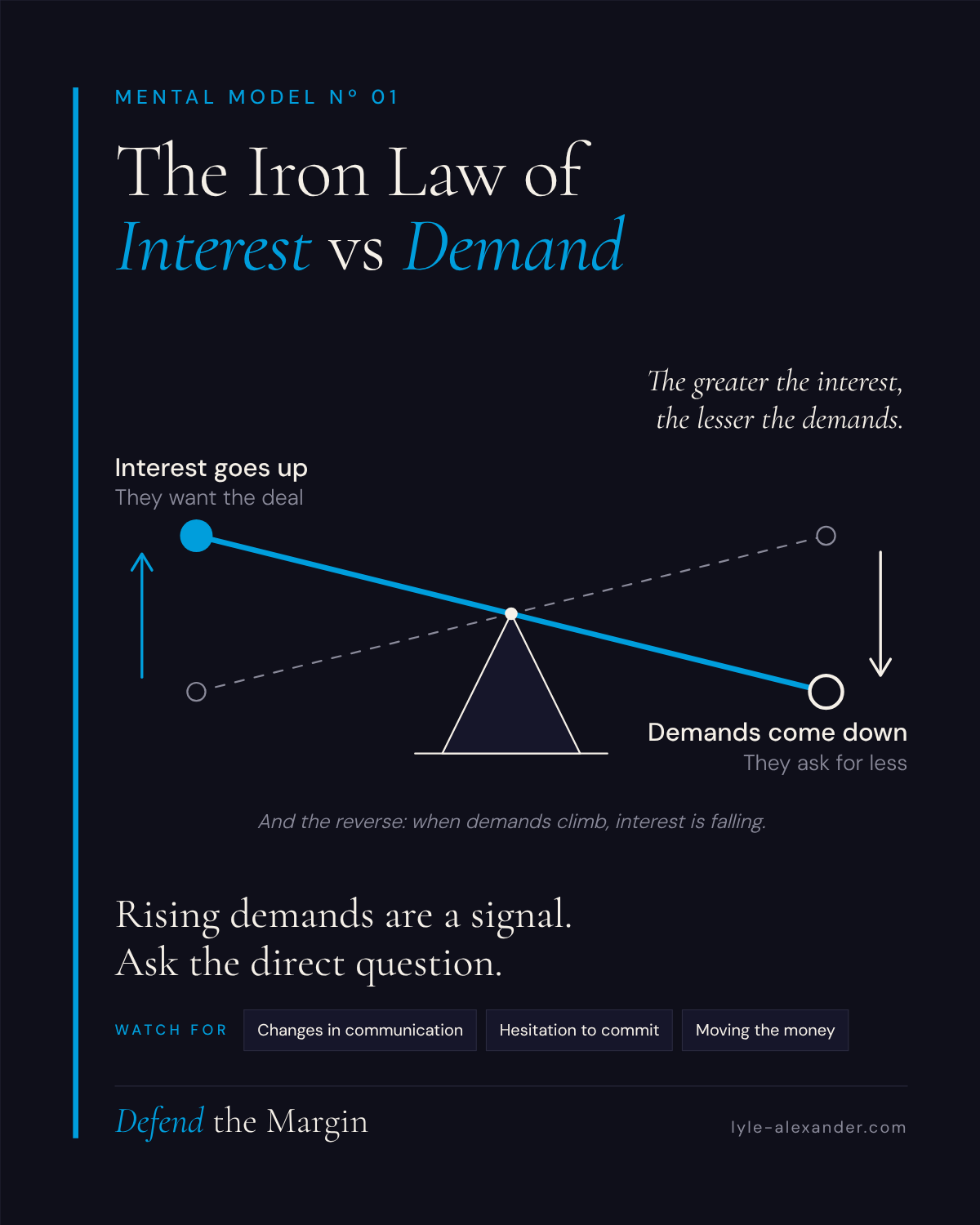
The Iron Law of Interest vs Demand
The more someone is interested, the lower their demands. The reverse always holds: the higher their demands, the lower their interest in the deal. When a client says all the right things but stalls on next steps, pay attention to the behavior instead of the words. Slow replies, hesitation, sudden changes to the financial parameters: these are signals, but the truth may not surface without a direct question.
“I’ve noticed you’re not getting back to me as quickly as before. Is something new on your mind?”
That one question can save weeks of chasing and keep your pipeline healthy.
03 · Margin Movers
The hidden power of the Teams direct message
Proposals and resumes can get buried in your client’s inbox, and time kills all deals. If both firms run Microsoft 365, you can message a prospect in Teams.* Your first message arrives as a chat request they can accept or block. All you need is their email address.
*This no longer works if their company does not allow external access (thankfully it’s on by default, but admins can switch it off).
Try this week
Open Teams → Chat → New message.
Type your prospect’s email in the To: line and send:
“Hi Susan, I’ve just sent you that proposal by email. Shall we set a follow-up call?”
 AI tip
Write an in-house writing style guide
And while we’re touching on proposals, I recommend developing an in-house writing style guide. Spell out the standards of writing you want your firm to live up to. It can also contain bans on phrases readers associate with AI slop. Then you can set up your AI tools with these as standing instructions.
The Lyle Alexander Consulting writing style guide has been applied to every page of our website and all outgoing long-form communication. Almost everything we write starts here. A secondary checker script of 28 rules then blocks anything with an error, and a second AI that didn’t write the draft reads it against the guide. I edit or approve last.
If you want the same for your team, I’m happy to walk you through our setup on a call.
What would you like to learn more about, or hear in the next edition? Join the list and reply to any issue. Your questions shape what I write next.
Until next time, good hunting.
John
John Lyle · Founder, Lyle Alexander Consulting